Table of Contents
- Why Coffee Causes Jitters and What Your Body Needs Instead
- How to Get Rid of Coffee Jitters (Without Quitting Caffeine Cold Turkey)
- Coffee Alternatives for Anxiety: Drinks That Calm Instead of Spike
- Caffeine Alternatives for Energy: What Actually Delivers Steady Focus
- Low-Caffeine Coffee Alternatives: Matcha, Green Tea, and Chicory Compared
- Adaptogens, Functional Mushrooms, and the Gummy Format
- A Practical Transition Plan: Swapping Coffee Without Withdrawal Wrecking You
- Conclusion: Finding Your Steady Energy Ritual
- Frequently Asked Questions
Last Updated: October 16, 2026
Why Coffee Causes Jitters and What Your Body Needs Instead
Natural alternatives to coffee jitters start with understanding why caffeine hits some people harder than others. At NEURAWSOM, we hear the same story constantly: one cup feels fine, the second sends your heart racing and your hands shaky.
Caffeine works by blocking adenosine, the molecule that makes you feel sleepy (Caffeine and adenosine). The FDA guidance on caffeine and how much is too much notes that sensitivity varies widely, and some people feel effects at doses others barely notice.
Caffeine Sensitivity, Anxiety, and the Crash Cycle
Caffeine sensitivity is a reduced tolerance for stimulants that shows up as jitteriness, rapid heartbeat, and heightened anxiety, even at low doses. If you already live with stress or anxiety, caffeine amplifies those signals rather than creating calm focus.
The crash cycle makes it worse. Caffeine lingers for hours, so you spike, dip, and reach for another cup. By afternoon you're wired and tired at once, a loop that drains the steady energy you want.
How to Get Rid of Coffee Jitters (Without Quitting Caffeine Cold Turkey)
The fastest way to get rid of coffee jitters is to stop the spike, not the ritual. Keep a warm morning drink without the adrenaline rollercoaster by lowering caffeine load and adding support for calm focus.
Immediate Fixes vs Long-Term Adjustments
When jitters hit, reach for water and food first. Dehydration and low blood sugar both make shakes worse. A protein-rich snack and a large glass of water can settle symptoms within 20 minutes.
Long-term, change the pattern:
- Cut your serving size in half and see how you feel
- Push your first cup back by an hour
- Swap your afternoon coffee for a lower-caffeine option
Coffee Alternatives for Anxiety: Drinks That Calm Instead of Spike
Coffee alternatives for anxiety deliver warmth and ritual without triggering the adrenaline response. The best contain far less caffeine or none at all, and some include ingredients that support a calmer nervous system.
Herbal tea is the simplest starting point: chamomile, peppermint, and rooibos are naturally caffeine-free and easy to find. Golden milk, a warm turmeric-and-milk blend, is a soothing evening option.
For something with a little lift but no edge, consider these:
- Chicory coffee for the taste and mouthfeel of coffee, caffeine-free
- Matcha for calm, sustained alertness at lower caffeine
- Yerba mate for a gentler lift than espresso
Caffeine Alternatives for Energy: What Actually Delivers Steady Focus
Caffeine alternatives for energy fall into two groups: drinks with less caffeine, and non-caffeine ingredients that support focus through other pathways.
The non-caffeine route leans on adaptogens and functional mushrooms. Adaptogens are plants and fungi that help the body manage stress and maintain balance.
B vitamins and hydration matter more than most people realize. Mild dehydration mimics fatigue, and B vitamins support normal energy metabolism.
Low-Caffeine Coffee Alternatives: Matcha, Green Tea, and Chicory Compared
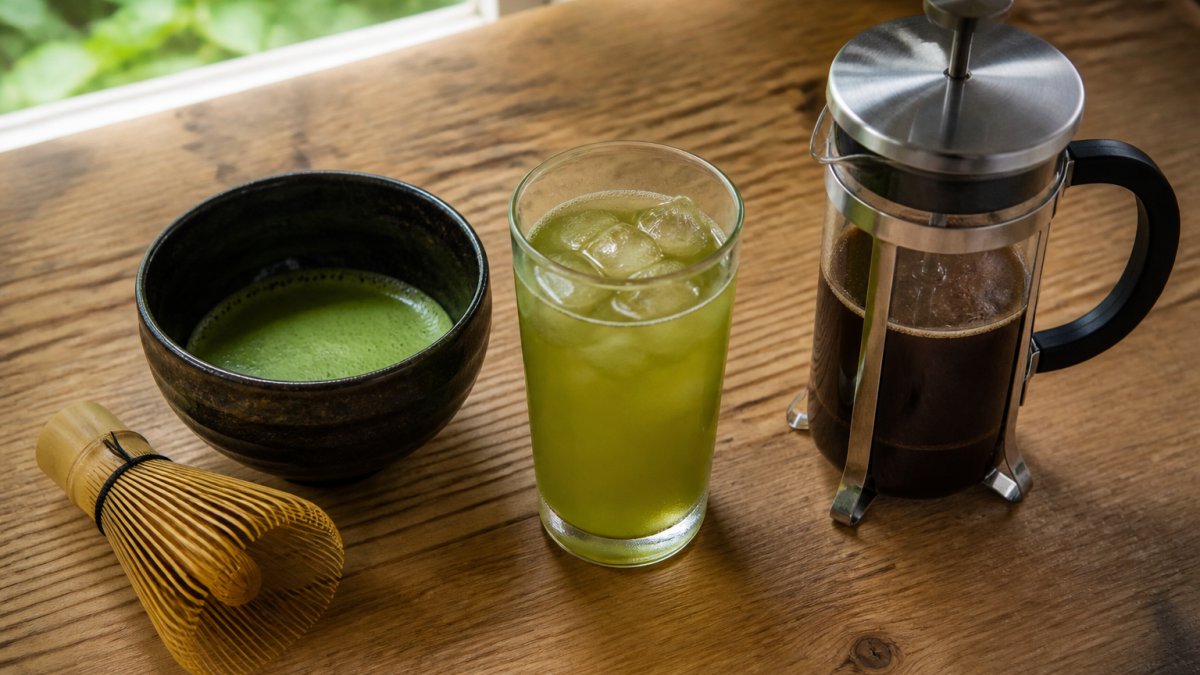
Low-caffeine coffee alternatives let you keep the ritual while cutting the stimulant load. Matcha, green tea, and chicory each solve a different part of the problem, and the right pick depends on whether you want some caffeine or none.
Caffeine Content Side by Side (With Real Ranges)
Caffeine content swings widely with serving size, steeping time, and preparation method, so treat these as typical ranges rather than fixed values. The FDA has cited roughly 400 mg per day as not generally associated with negative effects for most healthy adults, but individual sensitivity varies far below that threshold.
| Drink (typical serving) | Caffeine (approx.) | Best For | Taste |
|---|---|---|---|
| Brewed coffee (8 oz) | 95-165 mg | Strong lift | Bold, bitter |
| Espresso (1 oz shot) | 60-75 mg | Fast lift, small volume | Intense, rich |
| Matcha (1 tsp, whisked) | 60-80 mg | Calm alertness | Grassy, earthy |
| Black tea (8 oz) | 40-70 mg | Steady focus | Malty, brisk |
| Green tea (8 oz) | 20-45 mg | Gentle lift | Light, vegetal |
| Yerba mate (8 oz) | 65-85 mg | Gentler lift than espresso | Herbal, smoky |
| Chicory coffee (8 oz) | 0 mg | Coffee taste, no caffeine | Roasted, nutty |
| Herbal tea (8 oz) | 0 mg | Evening wind-down | Varies |
| Golden milk (8 oz) | 0 mg | Soothing ritual | Warm, spiced |
A few practical notes that most lists leave out:
- Matcha's edge isn't lower caffeine, it's slower delivery. The whole leaf is consumed, so caffeine releases gradually alongside L-theanine, an amino acid found in tea. Many people describe the result as calmer alertness, though the effect is modest and not a substitute for medical treatment of anxiety.
- Green tea's caffeine varies with steep time. A 1-minute steep lands near the low end; a 4-minute steep pushes toward the high end. If you're sensitive, shorter steeps and cooler water help.
- Chicory root contains no caffeine at all. It's roasted and ground like coffee, so it mimics the flavor and mouthfeel without the stimulant. Many people blend it half-and-half with regular coffee to taper down.
Evidence Quality: What's Established vs. What's Marketing
It's worth separating what's well-supported from what's mostly hype, since the two get blurred constantly.
- Well-established: Caffeine content in coffee, tea, and matcha is measurable and consistent enough to plan around. L-theanine's calming effect alongside caffeine has reasonable research support, though effects are mild.
- Mixed evidence: Adaptogens like ashwagandha and rhodiola have some small studies suggesting stress-modulating effects, but results are inconsistent and dosing varies widely between products.
- Limited evidence: Functional mushroom claims (lion's mane for focus, reishi for calm) rest mostly on traditional use and early-stage research. They're generally well tolerated, but they aren't a proven replacement for caffeine's alerting effect.
If a product promises 'coffee-level energy without caffeine,' that's a marketing claim, not a pharmacological one. No caffeine-free drink produces the same adenosine-blocking effect, because that mechanism requires caffeine.
How to Pick Between Them
- Want coffee taste, zero caffeine: chicory, alone or blended.
- Want a small lift with a smoother curve: matcha or green tea.
- Want a gentler stimulant than espresso: yerba mate.
The right choice depends on whether you're trying to eliminate caffeine or just reduce the spike. Both are valid goals, and both are easier with real numbers in front of you.
Start Your NEURAWSOM Routine →
Adaptogens, Functional Mushrooms, and the Gummy Format
Adaptogens and functional mushrooms support focus and stress resilience without the stimulant spike. They work gradually, so consistency matters more than timing. This is the space NEURAWSOM was built for.
Our precision-balanced blend of functional mushrooms comes in a raspberry-flavored gummy, no pill to swallow, no powder to mix. One daily ritual supports clearer thinking, steady energy, and stress resilience.
If you're skeptical about gummies, that's fair. The format only works if the ingredients are dosed properly, which is why we focus on a balanced blend rather than a long list of underdosed extras.
A Practical Transition Plan: Swapping Coffee Without Withdrawal Wrecking You
A workable transition plan swaps coffee gradually and replaces the ritual, not just the caffeine. Withdrawal symptoms like headaches, fatigue, and irritability are common when caffeine intake drops sharply; they usually peak within 1-2 days and ease within about a week. A slow taper keeps that window manageable.
Step 1: Measure Your Baseline
Before changing anything, estimate your current daily caffeine. Almost every guide skips this step, and it's the one that makes the rest work.
- 8 oz brewed coffee: roughly 95-165 mg
- 1 oz espresso shot: roughly 60-75 mg
- 8 oz black tea: roughly 40-70 mg
Add up everything, coffee, tea, soda, chocolate, pre-workout, and write the total down. That number is your starting point.
Step 2: Taper by About 25% Every 3-5 Days
A common pattern that works for many people is cutting roughly a quarter of your daily caffeine every 3-5 days. If you're at 300 mg, that looks like:
- Days 1-4: 300 mg → 225 mg (swap one cup for half-caf or tea)
- Days 5-8: 225 mg → 170 mg (swap afternoon coffee for matcha or green tea)
- Days 9-12: 170 mg → 125 mg (half-caf in the morning, chicory or herbal in the afternoon)
You don't have to reach zero. Many people find a stable landing point around 50-100 mg per day, enough for a gentle lift without the jitters.
Step 3: Replace the Ritual, Not Just the Caffeine
Caffeine habits are as much about the warm cup, the pause, and the routine as the drug itself. Remove caffeine without replacing the ritual and the habit tends to snap back.
- Keep the same mug, the same time, the same chair.
- Swap in chicory, matcha, or herbal tea so the sensory cue stays intact.
- Pair the drink with something that supports steady energy: protein, water, and a short walk.
Step 4: Manage Withdrawal Symptoms
Withdrawal is real but usually short. What helps:
- Headaches: hydration, regular meals, and a slower taper if symptoms are sharp.
- Fatigue: earlier bedtime for the first week; caffeine withdrawal and sleep debt often overlap.
- Irritability and low mood: light exercise and daylight exposure help more than most people expect.
If symptoms are severe, or if you have a medical condition, the sensible move is to slow down rather than push through.
Step 5: Add a Non-Stimulant Daily Ritual
Once the caffeine load is lower, a daily non-stimulant ritual helps hold the new pattern in place. This is the space NEURAWSOM was built for, a precision-balanced functional mushroom gummy that supports focus and stress resilience without the stimulant spike. One raspberry-flavored bite, no pills or powders, slots into the morning routine you're already keeping.
Conclusion: Finding Your Steady Energy Ritual
The real challenge isn't finding a coffee substitute. It's building a daily ritual that gives you focus without the spike and crash, the right drink, a sensible taper, and a routine you'll actually keep.
NEURAWSOM makes that routine simple. Our functional mushroom gummies support clearer thinking, steady natural energy, and calm stress resilience, all in one raspberry-flavored bite with no pills or powders.
Frequently Asked Questions
What calms down coffee jitters quickly?
Drink water and eat a small snack with protein or fiber to slow caffeine absorption. Gentle movement like a short walk helps your body metabolize the caffeine faster. Avoid more caffeine or sugar, which extend the jittery feeling. Most coffee jitters ease within 30 to 60 minutes as your body processes the caffeine. If jitters come with a racing heart or chest pain, seek medical advice.
What to replace coffee with for anxiety?
Herbal teas like chamomile and lemon balm contain no caffeine and may support a calmer state. Golden milk with turmeric and a touch of black pepper is another warm, caffeine-free option. Matcha offers a gentler lift because its caffeine releases more slowly, but if anxiety is your main concern, starting with caffeine-free choices is safer. Functional mushroom gummies are another route for steady energy without the spike.
Which natural drinks provide energy without coffee jitters?
Matcha and green tea provide smaller caffeine doses plus L-theanine, which softens the stimulant effect. Yerba mate delivers caffeine but often feels smoother for some people. Chicory coffee is caffeine-free and gives a roasted, coffee-like taste. Golden milk and herbal blends skip caffeine entirely. Pair any of these with hydration, a balanced meal, and consistent sleep for the steadiest results.
How long do coffee jitters usually last?
Caffeine's half-life is roughly 3 to 5 hours in most adults, so jitters typically peak within 30 to 60 minutes of drinking coffee and fade over the next few hours. Sensitivity, body weight, medications, and how much you drank all affect timing. If jitters last longer than expected, you may be a slow metabolizer. Cutting your serving size or switching to low-caffeine alternatives can shorten the window.